Posted on

Grand Maison, l’amour des bonnes choses

Plusieurs établissements liégeois servent notre pain au quotidien. Nous vous proposons de les (re)découvrir au travers d’une série d’articles. Premier arrêt : Grand Maison, face au quai de la Goffe.

Depuis l’été 2015, Fanny et Céline servent notre pain chez Grand Maison, à deux pas de la cité administrative de Liège. Ce qui réunit Grand Maison et Une Gaufrette Saperlipopette ? L’amour des bonnes choses, préparées simplement.

C’est autour d’un œuf mollet servi sur une assiette de haricots sauce tomate, le tout accompagné de quelques tranches de notre pain à la betterave que Fanny et Céline ont répondu à nos questions.

L’origine du projet ? L’amour du café. « On avait vraiment envie de rassembler les gens autour de la table et le prétexte du café était parfait pour ça ! » L’endroit accueille tout le monde : des familles, des lève-tôt mais aussi ceux qui viennent pour y travailler, dans une ambiance comme à la maison.

Vous servez le pain d’Une Gaufrette Saperlipopette tous les jours, pourquoi ce choix ?

On essaye de ne travailler qu’avec des produits locaux et de bonne qualité, c’est pour ça qu’on s’est tournées vers Une Gaufrette Saperlipopette. On a tout de suite senti que chez eux c’était l’amour du pain et de la bonne farine, et ils sont complètement transparents, c’est vraiment ce qu’on recherchait.

Il y a la proximité aussi : c’est proche géographiquement mais aussi humainement, c’est ce qui a fait la différence à nos yeux. Puis le fait de pouvoir aller chercher son pain à pieds ou à vélo c’est super.

On partage la même philosophie en fait : on sert de bonnes choses, préparées simplement.

Quel pain choisissez-vous ?

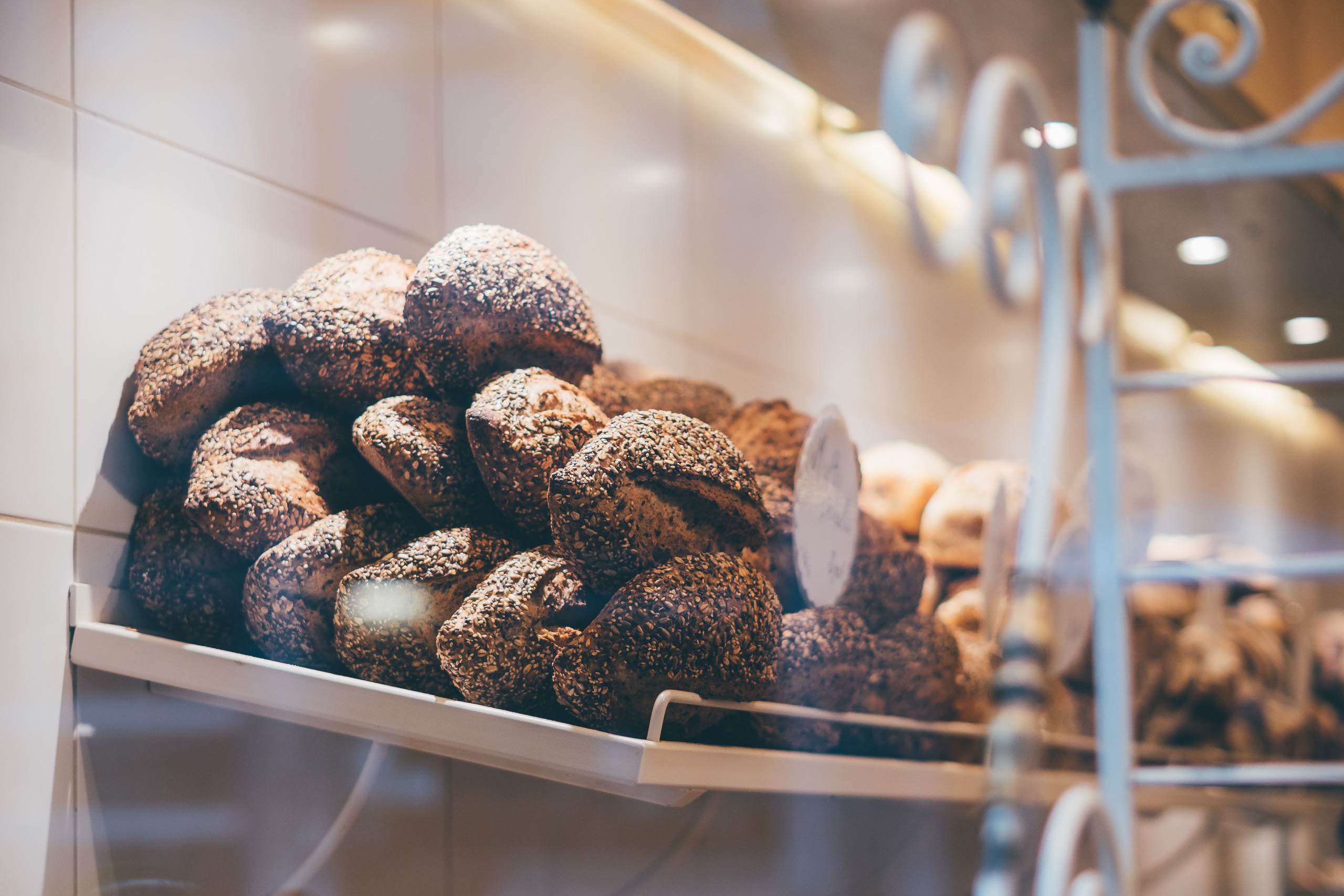
On prend souvent les mêmes mais on aime bien prendre ce qu’ils ont en boutique, ça nous permet de découvrir de nouveaux pains ! On adore le pain au levain car en plus du goût un peu suret, il y a le côté sain qu’on recherche aussi : on a envie de bien manger et on sert nos clients comme on servirait nos enfants.

On aime aussi beaucoup le pain à la betterave qu’on sert généralement sur l’assiette du dimanche, il fonctionne hyper bien avec l’œuf mollet ! Sinon on prend parfois le blanc brique : ça peut paraître bête mais comme il est carré, c’est plus facile pour nous de couper des tranches de taille constante.

Avec quoi le servez-vous ?

Le plus souvent avec du salé mais ça fonctionne aussi avec du sucré, surtout le pain au levain. On fait aussi des croûtons pour les soupes, on a déjà essayé avec d’autres pains mais ce n’était pas la même chose : les croûtons c’est spécialement avec le pain d’Une Gaufrette Saperlipopette !

On vient chez Grand Maison pour boire un café mais aussi pour manger, quelles sont les formules proposées ?

Notre menu est différent de semaine en semaine mais aussi le week-end. On a vraiment un système à deux vitesses : en semaine c’est assez paisible, mais le week-end l’ambiance est complètement différente car la Batte est juste à côté, on reçoit donc plus de monde. Les assiettes du week-end sont aussi très différentes, elles mélangent le sucré et le salé et sont plus fournies.

Par ailleurs, les clients d’Une Gaufrette Saperlipopette qui ont envie d’accompagner leur gaufre ou chouquette d’une bonne tasse de café sont les bienvenus. Avis aux amateurs !

Grand Maison
37 Quai de la Goffe, 4000 Liège
http://grandmaison.be

Photos : Karl Delandsheere
Posted on

News from the fields

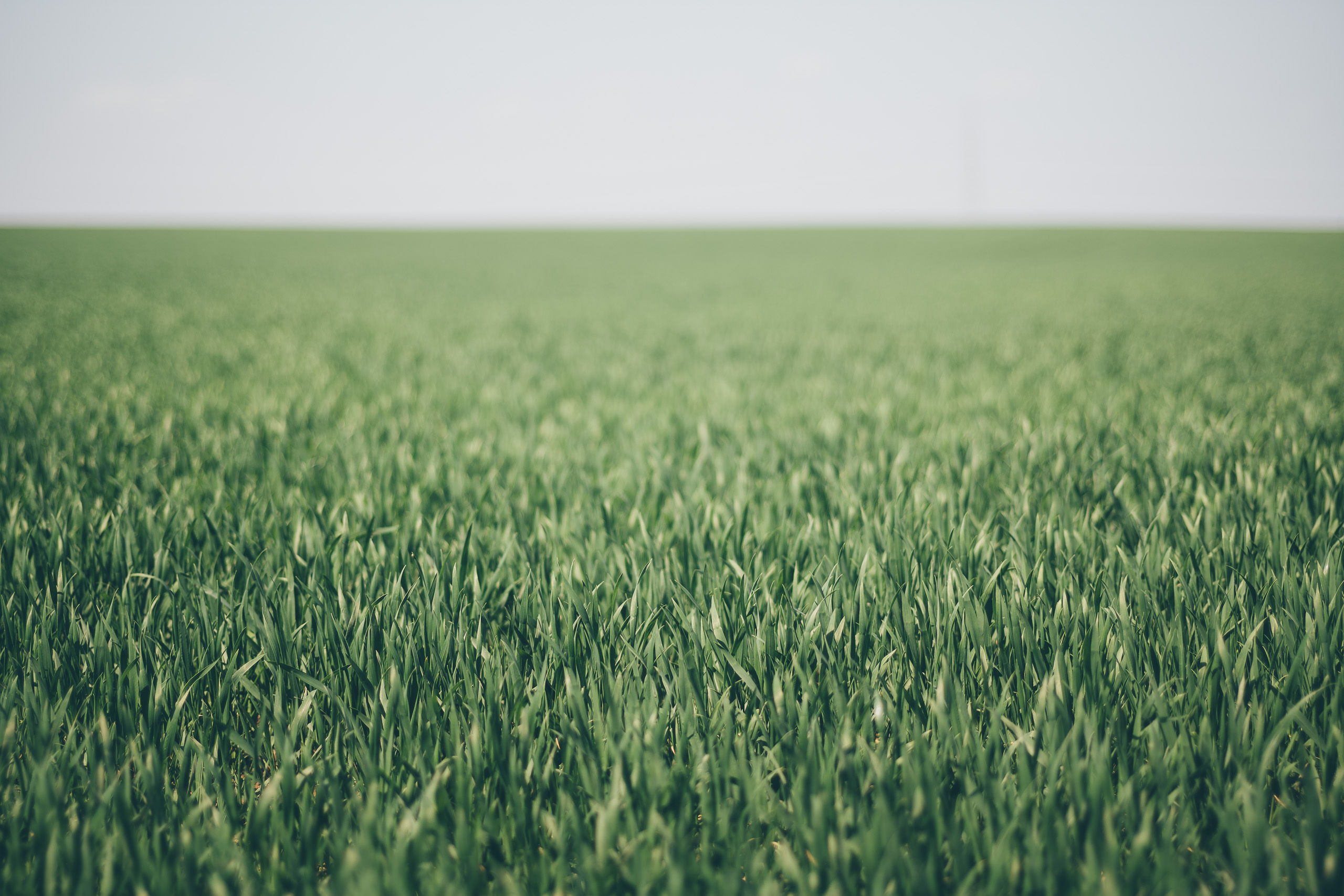
Last Friday, 20 April, the mercury hit 27°C and the sky was azure blue. In other words, the ideal conditions to capture a few images of the Triti-Sano cereals that will produce our future flour, at the Moulins Bodson in Villers-l’Évêque…

Safely sheltered inside the plant, the wheat heads are still tiny. “Like a baby in the mother’s womb!” Claude Bodson enthuses. As far as the eye can see, the green fields ripple in the breeze. The rapeseed fields gleam intensely yellow and bring a contrast befitting an impressionist painting.

“It is the most beautiful time of the year. Nature awakens, everything comes to life”, Claude comments. “The weather is fantastic. Too fantastic even! We are not sure that the harvest conditions will be the same!”

A promising year

So far, everything is going just fine for the wheat. “The late season was particularly humid. The soil was soaked with water, but the cereals settled well in the fields” explains Claude.

In winter too, very intense frost snaps ensured the vernalisation of the plant. “The vernalisation is a natural stage in wheat culture. Frost stops the growth of the cereals that enter a lethargic state of which they emerge later, when the temperatures rise.”

And talking about rising temperatures, they certainly are! “Fortunately, I expected that drier period: we gave the plants their first feed at exactly the right time. I anticipated the second feed. As it rained a lot from October to January I felt it would be drier afterwards. Nature always restores what she undoes.” Result: the fields are lush!

Not a done deal yet

Even if the conditions were very good until now, Claude emphasises that nothing’s certain yet. “There are no certitudes in our profession. The ideal would be to have a temperate June with some rain but not too much, then lots of sun at harvest time in late July, early August.”

So you will need a bit more patience to taste the result of the 2018 harvest in our bread, waffles and chouquettes…

Photos : Karl Delandsheere

Posted on

Sourdough bread: yes, but not just any

Sourdough bread has enjoyed a comeback in our bakeries for a few years now. But be warned: not all sourdough loaves are created equal!

Let’s first recap the basics: to make bread, you need water, flour, salt and an ingredient that triggers the fermentation of the dough. That ingredient usually is baker’s yeast or sourdough, and sometimes even a mix of both…

Sourdough in short

Sourdough is produced from mixing flour and water and leaving wild yeast and lactic bacteria, that are naturally present in the flour and the ambient atmosphere, to work…

After a few days of fermentation, you obtain sourdough. As a living element, sourdough must be regularly fed with water and flour to be conserved and to survive. It must also be preserved in a stable environment (temperature, humidity…).

From ancient techniques to industrialisation

Known since ancient Egypt, sourdough was the only resource the baker had to make his bread rise in the past. In the 19th century the development of industrial baker’s yeast released him from the restrictions of this natural ingredient that is not always easy to control and requires constant attention.

The chef Eric Michaux is feeding the sourdough.

For 150 years, sourdough almost completely disappeared from our bakeries… before its strong comeback and rediscovery of its flavour properties and its digestible nature. With one major difference: it is not systematically produced by the baker as it was in the past. Industrial solutions such as dried powder sourdough, ready to use liquid sourdough or concentrated sourdough were developed by the industry to make the baker’s work easier.

Not all sourdough is alike

There are no regulations on the name “sourdough bread” in Belgium. You can be sold sourdough bread that is not actually made with naturally produced sourdough, but that contains industrial powder sourdough with added enhancers for example.

In France, on the other hand, the recipe of sourdough bread is regulated: the term is reserved for bread that does not contain more than 0.2% yeast, with a minimum of 20% active sourdough.

Our sourdough: only homemade

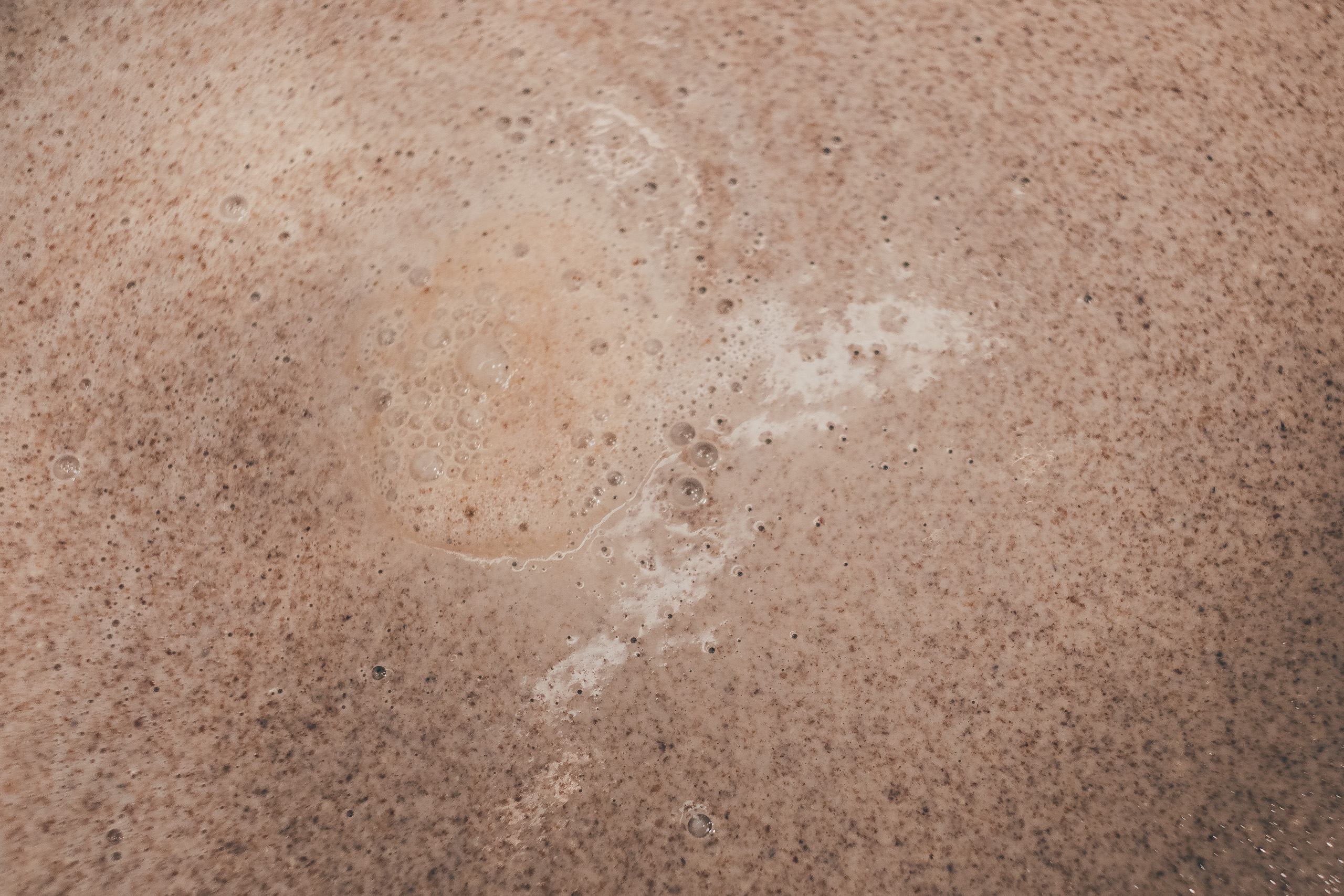
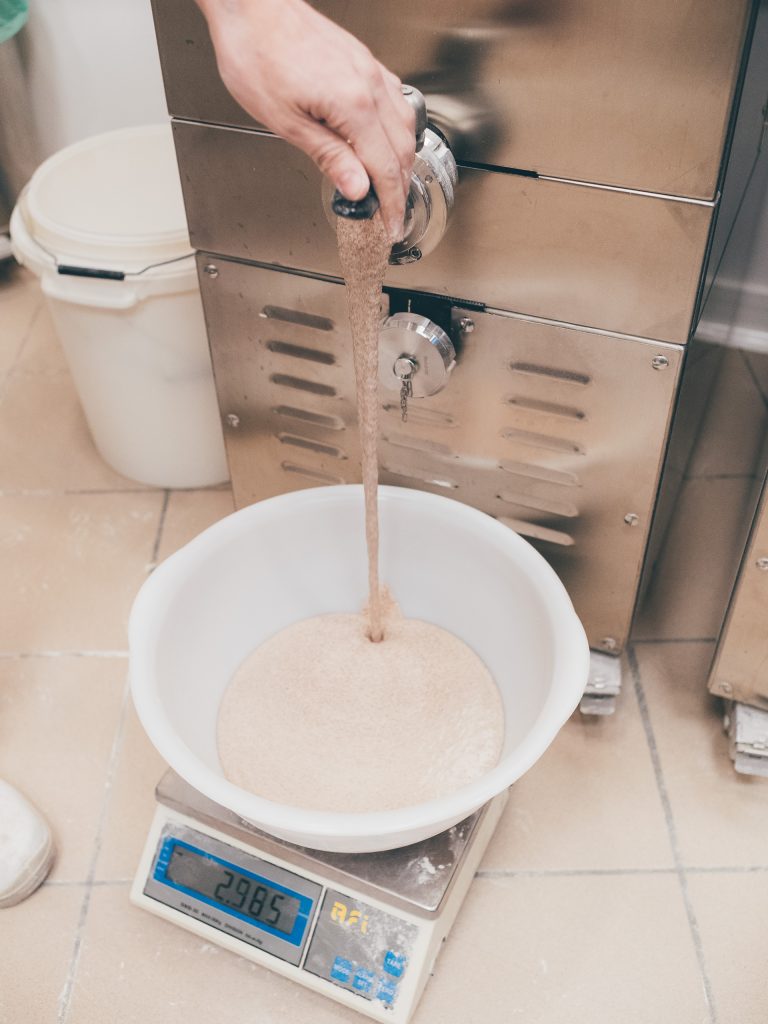
At Une Gaufrette Saperlipopette, we produce our own sourdough (white and brown) in specially designed machines (Tradilevain). They are fed with the same flour, free from any additives and enhancers, as our bread: that originating from Triti-Sano wheat grown at Villers l’Evêque, and with spring water.

To rise our bread and viennoiseries, we use our homemade sourdough, with a hint of yeast and not a single additive. And in addition we also propose 100% sourdough brown and white bread. Why not try them yourself!

Posted on

Are there food additives in your bread?

Colourants, preservatives, taste enhancers, emulsifiers… Food additives are everywhere! Read the ingredients on products sold in your supermarket to see for yourself. And are there any in your bread?

Take the first food product packaging you find. Put on your glasses and read the list of ingredients. In tiny letters, next to the familiar ingredients in our cupboards (sugar, salt, eggs, oils…), you will probably see a few mysterious codes appear in the shape of an E followed by 3 digits. Those codes correspond to a European classification of food additives.

Europe defines food additives as “any substance usually not consumed as a food item in itself and not used as a typical ingredient in nutrition”. Those substances find their way to our plates because of their technical or taste properties. Some additives extend the preservation of food items, others simplify production…

What about additives in bread?

It’s not easy to find out for the consumers. Bread bought at the bakery is not pre-packed and therefore not subject to the same labelling requirements as supermarket products for example. There is no list of ingredients on your bread bag.

If you ask your baker, he will probably confirm that his bread consists of flour, water, salt and yeast or sourdough. Nothing else! Odds are that this reply is given in good faith. Actually, to find additives, it is not the bread that should be examined, but rather one of its major ingredients: flour.

All flours are not equal

To produce flour, it is enough to grind wheat in theory. In practice, it is not that simple anymore: the wheat production has considerably evolved in the past few decades. Wheat is traded in the international markets. Flour is almost always the result of a combination of different wheat varieties.

During manufacture and depending on the use it is intended for, wheat can be enhanced with additives. These eradicate possible imperfections in the wheat and facilitate the work of the baker. They make the bread dough easier to work with, the crumb is uniform…

The use of those additives is completely legal and authorised in the European Union. Even so-called “traditional French” bread can contain them without losing that name however.

Working without additives: a conscious choice

At Une Gaufrette Saperlipopette, we have opted for eliminating all additives from our production. That approach is only possible under one condition: the availability of flour that only contains crushed wheat, nothing else.

Our flours are unique: they only originate from wheat grown at a few kilometres from the bakery, at Villers-l’Évêque (Triti-Sano cereals) and are free from any additives, adjuvants or enhancers.

That choice has consequences: every harvest is different. The properties of our flours vary: it is our job to adapt to them. But we are happy and satisfied to take on that challenge every day!

Photos : Karl Delandsheere
Posted on

New website, Saperlipopette!

Voilà! Une Gaufrette Saperlipopette has its own website.

We weren’t totally offline though: as you may know, we share a lot on Facebook and Instagram.

This website came from the will to talk more actively and thoroughly about the origin of our products, our commitment, our team, and our projects. Our brochure, which you may have already read, is part of the same will.

Don’t hesitate to come back often. We’ll share new contents on a regular basis.